

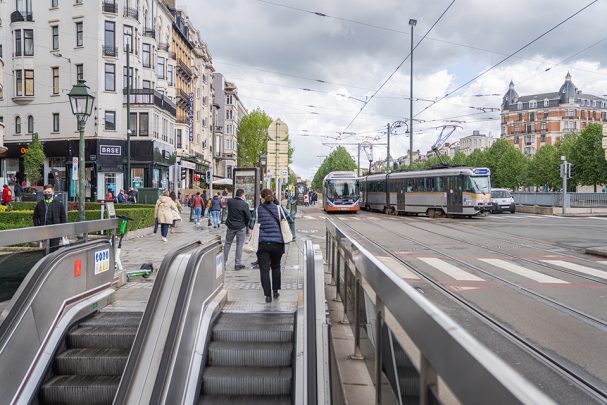
It is almost impossible to ignore: Belgium, like the rest of Europe, is going through an energy crisis. While the rise in electricity and gas prices represents a huge cost for the population, the STIB has taken measures to limit the impact and safeguard public transport in Brussels. Let’s take a closer look.
Saving energy
The STIB has been pursuing a powerful energy-saving policy for years. Part of this stems from its emissions strategy, because saving energy also means reducing emissions. This strategy is therefore applied across the network daily.
Green buildings
Every new STIB building (depot, station, etc.) is subject to targets in terms of energy efficiency and environmental protection. Haren, Marconi, Marly… these are all STIB depots whose renovation or construction followed specifications aimed at achieving the lowest possible energy impact for operations: cogeneration, solar shading, insulation, geothermal energy, LED lighting (in buildings, but also in stations and vehicles) … The STIB applies strict rules to its buildings in order to contribute to the environment.
More than 5,000 solar panels
Across all our sites, we have installed 5,478 solar panels, covering more than 9,383 m² and producing 1,543 MWh per year. The electricity generated by our solar panels is equivalent to the average annual electricity consumption of more than 441 Brussels households.
Raising awareness among our colleagues
Our colleagues are aware of the importance of saving energy, because every action counts, however simple it may be:
- switching off the lights when leaving a meeting room
- keeping the heating set to level 3
- turning off the computer and screen at the end of the working day
- switching off all peripheral equipment such as printers before the weekend starts
- eco-driving training for our drivers
And so on! Even these small actions can have a major impact and help us learn to handle energy more efficiently.
Energy-efficient vehicles
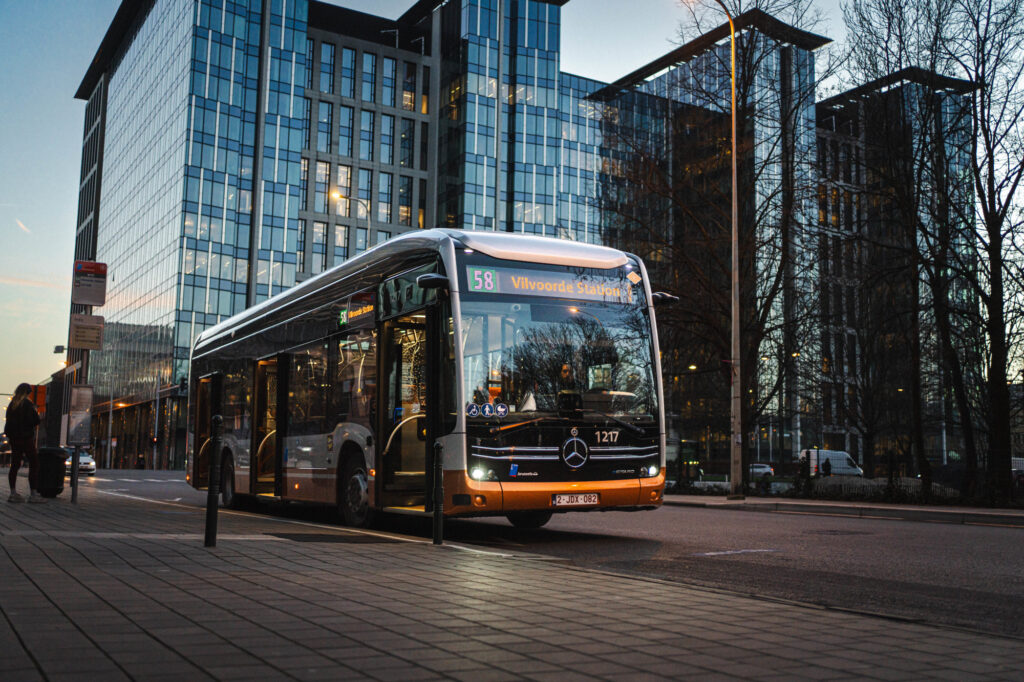
Did you know that the energy released when the metro brakes is reused for its own traction and for lighting? That may seem insignificant, but this energy recovery makes a real difference to the metro’s energy consumption. Since the start of the fleet electrification programme, the STIB’s electric buses have already covered more than 8 million kilometres. This has led to an emission reduction of more than 9,000 tonnes of CO2, based on a carbon emission factor for electricity that is representative for Belgium.
The STIB’s electricity consumption
The STIB consumes 250 gigawatt-hours of electricity per year for its network and buildings. This represents 0.3% of Belgium’s total consumption. Our tram, bus and metro network accounts for the vast majority of the energy consumption.
When purchasing this energy, we take the energy price into account and monitor it closely in order to buy at the right time. This way, we secured the energy we need until the end of this year at a favourable price.
In addition, our electricity is 100% green. Our supplier guarantees this through so-called guarantees of origin (GOs). Our green electricity sources are wind, solar or biomass.
And in the future?
We have all the gas volumes required to run our services. For 2026, purchases of low-voltage electricity and gas are covered. If the crisis were to continue until the end of 2026, we would be exposed to market prices in 2027.
The best energy is the energy we do not consume. That’s why we are continuing our efforts to reduce consumption, especially for gas. Electricity is purchased in instalments, usually when the price is at its lowest compared to the previous purchase. The STIB therefore continues to monitor market prices closely every day, so that it can buy step by step when the financial conditions are most favourable.
Our energy needs are essential to the proper operation of Brussels’ public transport network. At a time when energy prices are soaring, the STIB more than ever remains an indispensable solution for a sustainable mobility for all.