
The transition to an electric bus fleet is accelerating. In this article, we take a closer look at our commitment: by the end of 2035, we aim to replace our entire bus fleet with 100% electric vehicles in order to reduce our carbon footprint.
Electric buses since 2018
The first electric buses — midibuses — appeared on the network in mid-2018, followed by standard electric buses in the second half of the same year. The first articulated electric buses entered service in April 2019, along with the installation of the first charging stations at terminuses and in depots.
Our current fleet consists of:
- 93 fully electric buses
- 400 hybrid buses
- 357 diesel buses
In 2023, we ordered more than 100 new electric eCitaro buses: 70 articulated and 36 standard vehicles. Of these, 56 articulated buses are already in use on the network. These buses were funded by the European Union under the NextGenerationEU programme. They replaced the 51 articulated Citaro D2 Euro 5 buses in the STIB-MIVB fleet. The remaining 14 articulated buses and the standard buses will be delivered in 2026.
Around 300 additional electric vehicles, towhich will be ordered in the coming years, will replace most of the 357 diesel buses still in operation. By the end of 2035, the entire STIB-MIVB bus fleet will be electric.
Upgrading the depots
Of course the transition to an electric bus fleet requires significant refurbishment works in the depots.
At present, two depots are used for parking and charging electric buses, alongside other vehicle types: Jacques Brel and Haren.
Other depots are also being completely redesigned to accommodate electric buses:
- the second phase of the Marly depot, where electric buses can be charged
- the full equipment of the Jacques Brel and Petit Île/Klein Eiland depots
- the ongoing works at the Haren site
- those on the current Delta depot
Between 2033 and 2035, a new additional depot for electric buses will also be built in Delta, in collaboration with Bruxelles Environnement/Leefmilieu Brussel.
Installing charging stations
To run electric buses on the network, charging stations are also needed at terminuses.
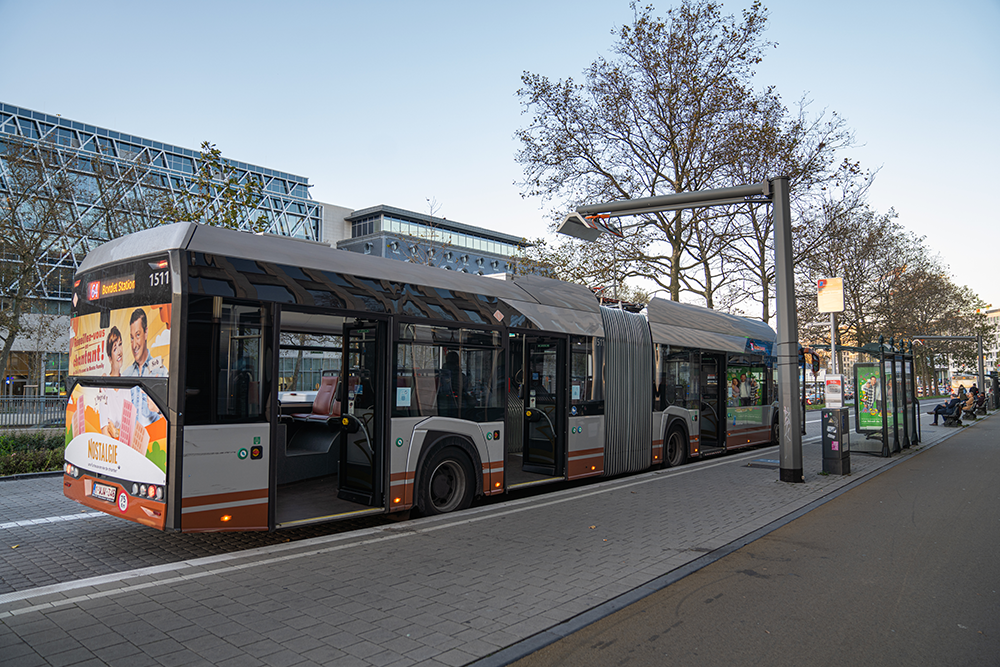
STIB-MIVB currently has three types of electric buses: midibuses, standard buses and articulated buses. The batteries of midi– and standard buses are charged when the buses are in the depot. Articulated electric buses must also be charged on the network during operation. For this, charging stations must be installed at the terminuses. These installations are essential for the continued transition to a fully electric bus fleet at STIB.
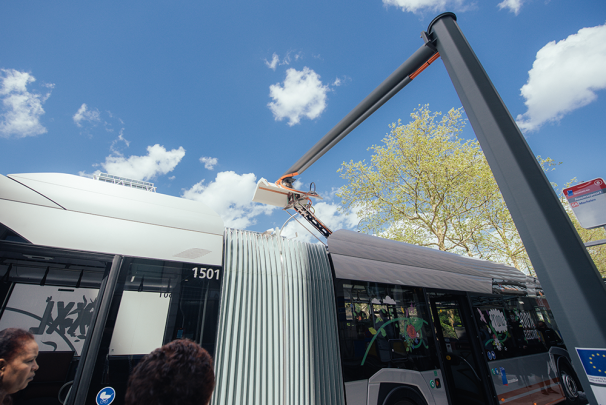
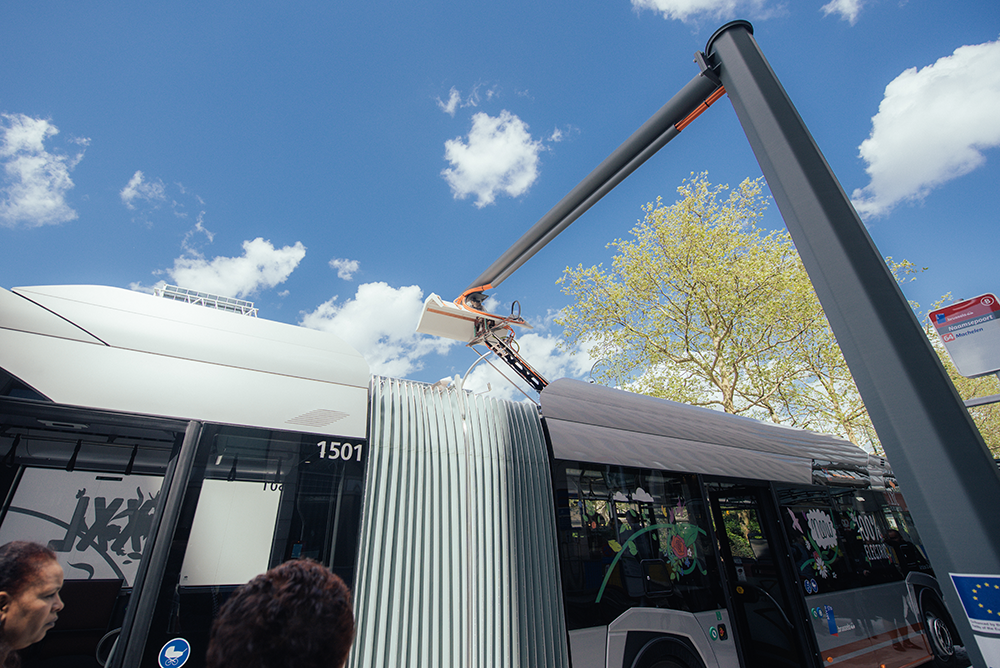
The first four charging stations were installed in April 2019 at the terminus of line 64, Porte de Namur/Naamsepoort (two stations), and at the entrance of the Haren depot (also two stations). These are charging masts. Articulated electric buses, fitted with a pantograph, can draw electricity from these masts by raising the pantograph. Charging at the terminus takes only a few minutes and provides a range of 30 to 40 km, which is more than sufficient for the normal operation of a bus line.
Now and in the future
Additional charging stations
Thanks in part to additional charging stations, we are currently able to operate the following lines with electric buses:
- Line 46 (Pannenhuis – Moortebeek)
- Line 53 (Marly – Westland Shopping)
- Line 87 (Simonis – Beekkant)
- Line 89 (Gare Central/Centraal Station – Westland Shopping)
More charging stations will follow between 2027 and 2029, as the transition to an electric fleet progresses and permits are obtained. In total, 18 terminuses will be equipped with charging stations by the time the fleet becomes fully electric, at the end of 2035.