

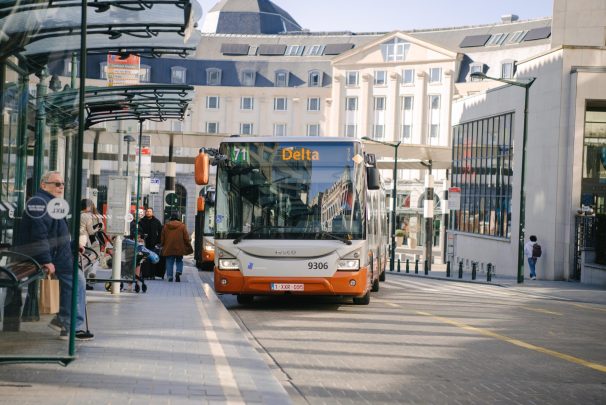
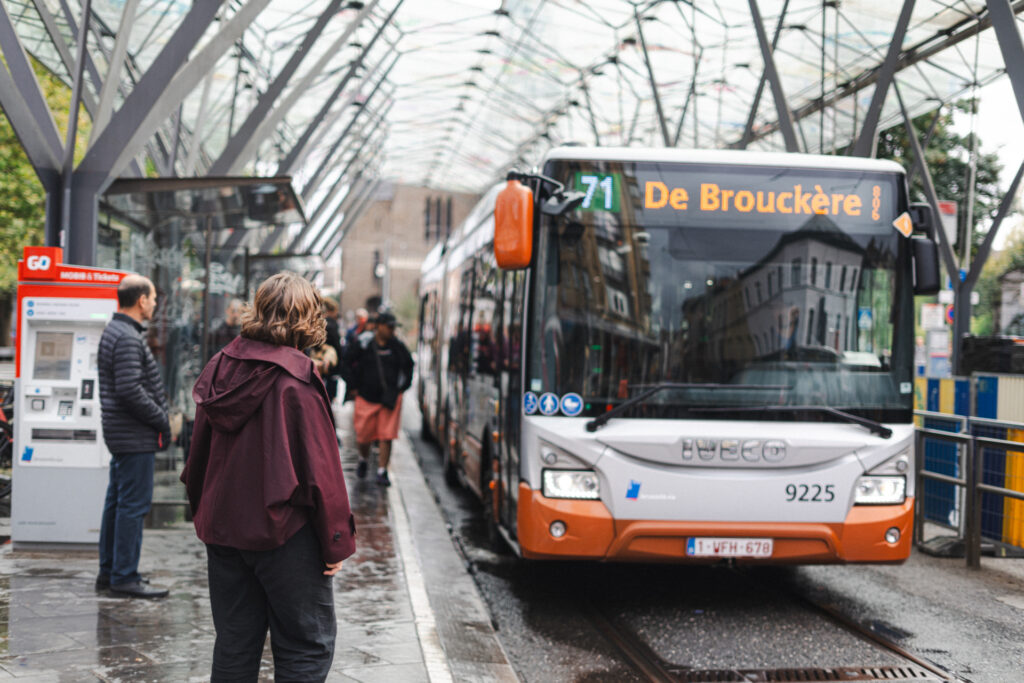
In 2022, line 71 celebrated its 50th anniversary. But do you really know this line, which lets Brussels roll past like a film before your eyes? Bus 71 begins its journey in the east of the city, between lively office buildings and green breathing spaces. It then crosses Ixelles, passing campuses, terraces and reflections on the water, before finally reaching the city centre, where the façades tell the story of the capital and everything seems within walking distance. Line 71 is much more than a route: it is a sample card of Brussels, vibrant and full of contrasts. Fancy (re)discovering the city in a different way? Hop on board!
First stop: Delta, where Brussels can breathe freely
After leaving Beaulieu, bus 71 soon reaches Delta. The open landscape provides the perfect backdrop to a more relaxed atmosphere, and you immediately feel the proximity of green spaces and the energy of a neighbourhood in motion, with the university nearby. This is also where the oldest metro depot of the STIB is located. It was from here that the first Brussels metro trains departed in the 1970s. In fact, it was from the Delta depot that, on 20 September 1976, the first metro train officially opened the network. Today, all types of STIB metro trains can still be found here, from the oldest M1 to the most recent M7. Delta is therefore the true birthplace of the Brussels metro.
It is the perfect starting point for a journey on line 71: the ride begins gently and gradually brings you closer to the bustling city centre, while the scenery becomes increasingly lively and contrasting along the way.
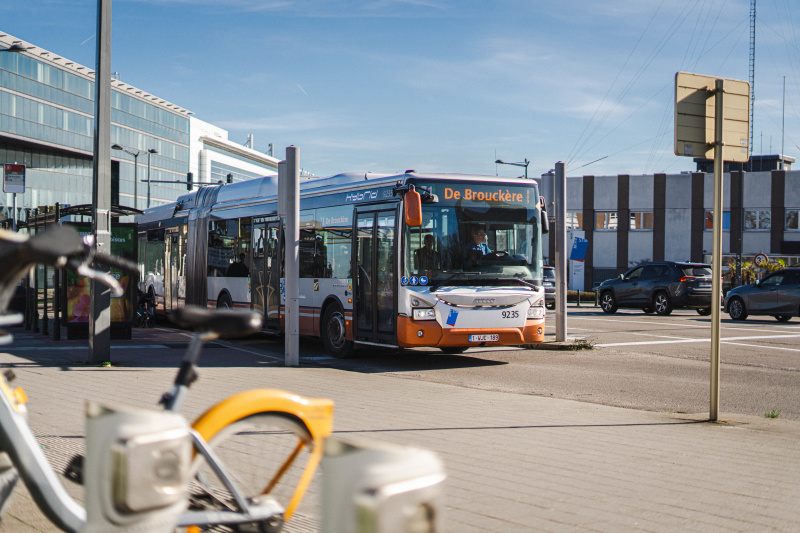
Back in time, through a garden full of history
Then the mood shifts abruptly. We approach an unexpected place for a “discovery outing”, and precisely for that reason it is well worth the detour: the Ixelles cemetery. Opened in 1877 in the south of Brussels, it is one of the most important cemeteries in Belgium, both for its size (around 12 hectares) and the richness of its funerary heritage. This cemetery garden forms an open-air museum of funerary architecture and sculpture, where styles from neoclassicism to Art Deco stand side by side along wide tree-lined avenues and carefully designed perspectives.
The site also tells the story of the development of Ixelles in the 19th century, when the municipality expanded rapidly and bourgeois families, artists and scientists settled there. The graves of many Belgian and international figures can be found here — artists, scientists, writers and industrialists — including violinist Eugène Ysaÿe, chemist Ernest Solvay and architect Victor Horta, who himself designed the Solvay family mausoleum.
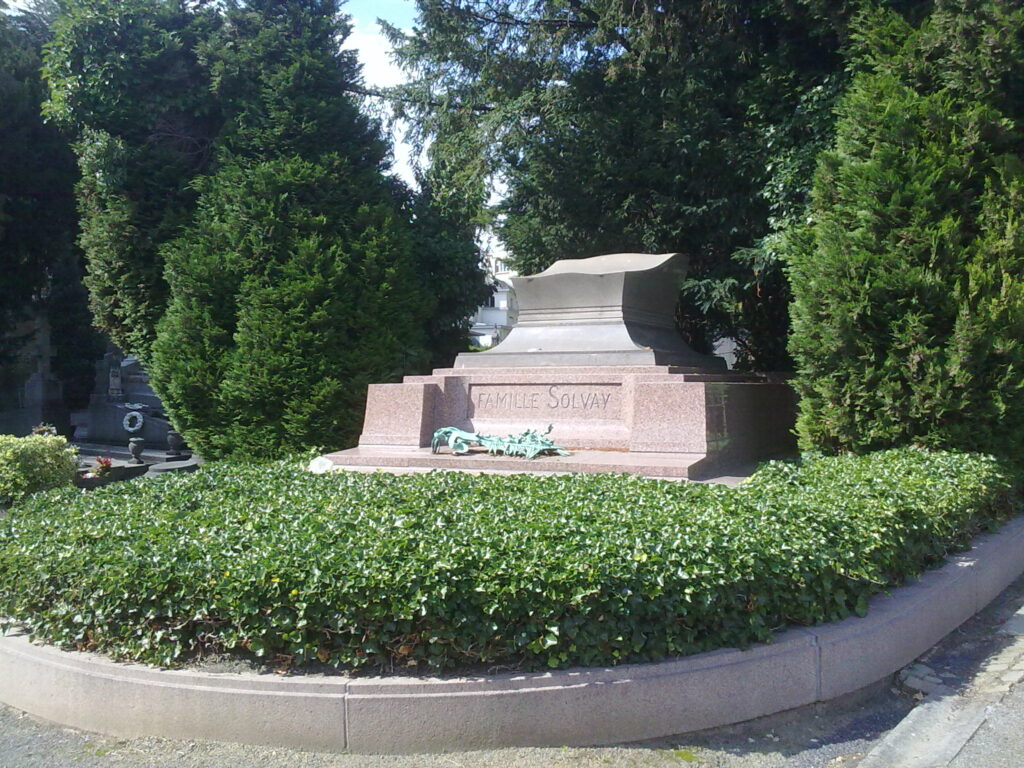
You find yourself naturally slowing down here, observing a detail or reading an inscription. It is not a stop like any other, and that is exactly what makes it so memorable: a peaceful pause filled with history, just a few minutes from the lively streets of Ixelles.
A line that follows the rhythm of the campuses
From here, line 71 picks up the pace. You take on the rhythm of student life. Around the VUB and ULB, it becomes immediately clear why line 71 is so closely linked to the campus life. Here, stops are not just points on a map, they are moments in the day. In the morning, people rush towards lecture halls. At midday, everyone takes their own kind of break. And the late afternoon is the time for meetings, activities and nightlife.
Line 71 is often presented as one of the busiest bus routes, and once you take it yourself, you quickly see why. It captures the city as it moves, as it is lived. A line that connects not only places, but also routines, appointments and the often heard “see you at the stop”
A ride to revitalise … without leaving the city
Line 71 has this rare talent: after barely two stops, it takes you in a completely new setting. At the Ixelles Ponds, the pace suddenly slows down. This picture-perfect view of Brussels, however classic, never loses its charm. The two ponds we see today are remnants of the former marshes of the Maelbeek valley. They took their current shape at the end of the 19th century, when the neighbourhood was extensively redeveloped during the expansion of Brussels. One of the ponds once stretched as far as what is now Place Flagey, before urbanisation reshaped the landscape.
Today, the water reflects the façades lining its banks, displaying Art Nouveau, Art Deco and neoclassical styles. Joggers, walkers, students, families or friends on a bench: everyone enjoys their break here in their own way. It is the perfect place to write a different story of Brussels: a city often described as busy and urban, yet still offering green breathing spaces in everyday life. The area is also shared with line 81, one of the longest routes on the network, which here follows the same atmosphere of water, greenery and neighbourhood life.
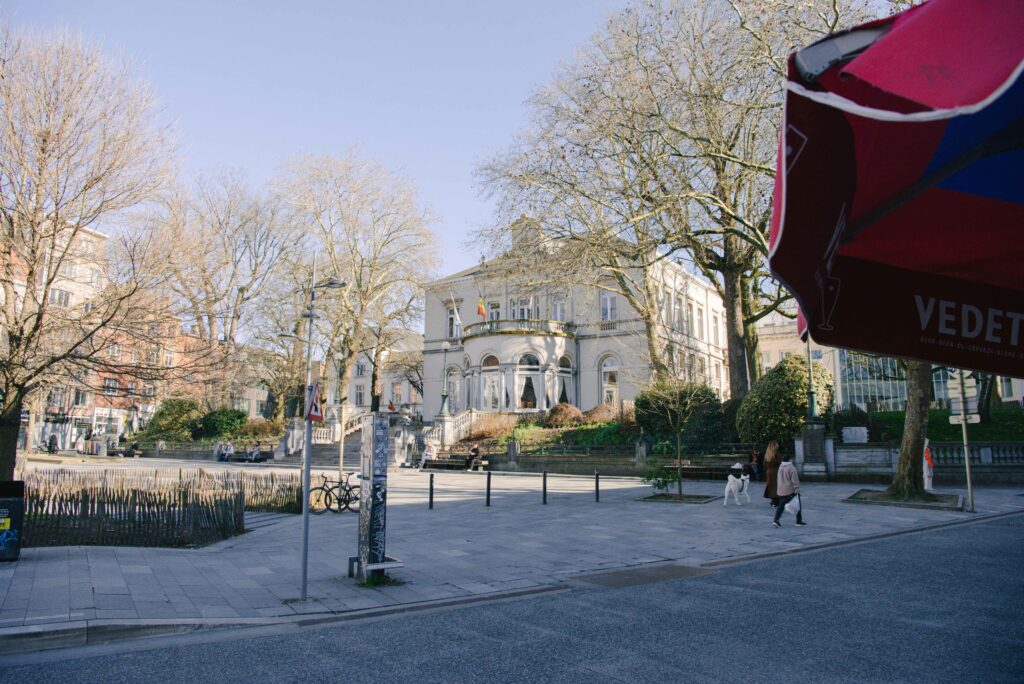
Right next to the ponds lies Place Flagey, which immediately gives you the feeling of being “in the right place”. It is a square that truly lives. A large and ever-changing crossroads known for its neighbourhood atmosphere: a lively market, terraces filling up as soon as the sun appears, and events that vary with the seasons. And of course, there is the “Packet Boat” (now known as the Flagey building). This former radio building, with its unmistakable Art Deco architecture, is a real landmark in the Brussels landscape.
A showcase of diversity
With line 71, the contrast is striking: you leave a green environment and, almost without noticing, find yourself immersed in the lively atmosphere of Ixelles. You can get off for a walk, take a photo or enjoy a drink, and then hop back on to continue towards the city centre. Stop after stop, terraces, shop windows and streets invite you to do something spontaneous.
Along the route, Place Flagey forms a natural transition. After Delta, VUB/ULB and Buyl, you first enjoy the calm surroundings of the ponds before heading towards the Saint-Boniface district and Porte de Namur, a real turning point. Here, the scale clearly changes. It is a hub of movement, shopping and pedestrian flows. But it is also the gateway to a multicultural neighbourhood that reveals another side of Brussels: Matongé. The name is inspired by a district of Kinshasa and has become synonymous with a lively atmosphere: hair salons, shops, flavours, music, encounters… People come here to shop, eat, discover and feel the city as it truly is: diverse and confident.
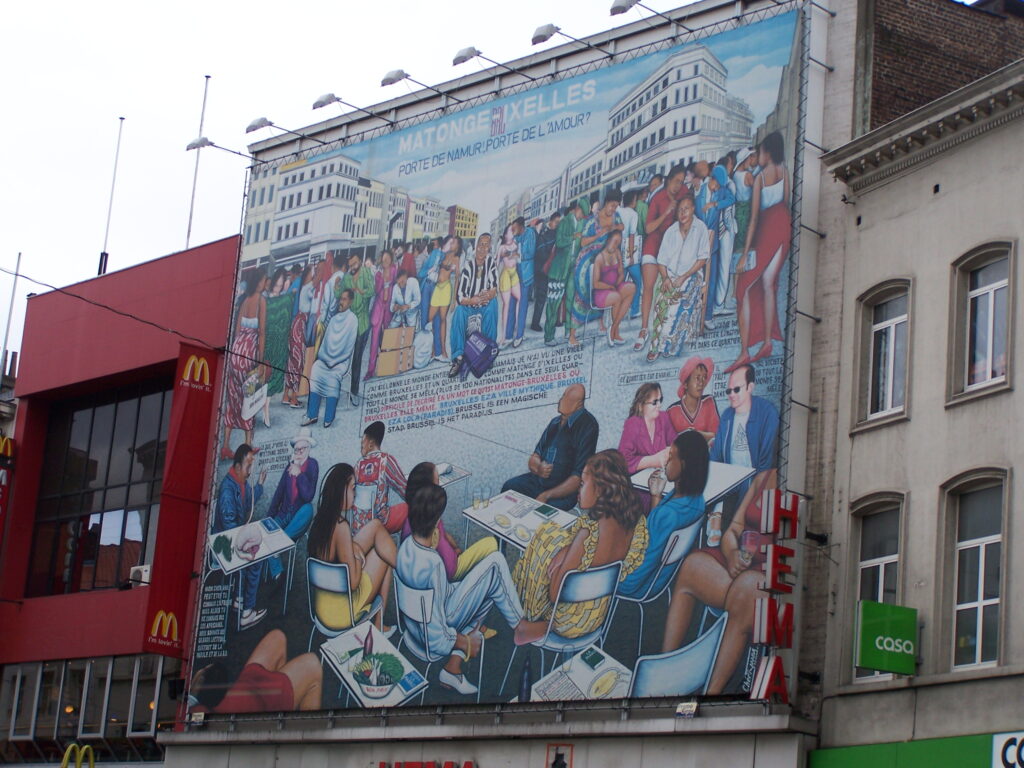
At that moment you might think: “OK, line 71 really does show everything Brussels has to offer.”
Majestic Brussels: views, gardens and the great classics
A few stops further, the atmosphere changes once again. The commercial buzz gradually gives way to a more monumental, almost ceremonial setting.
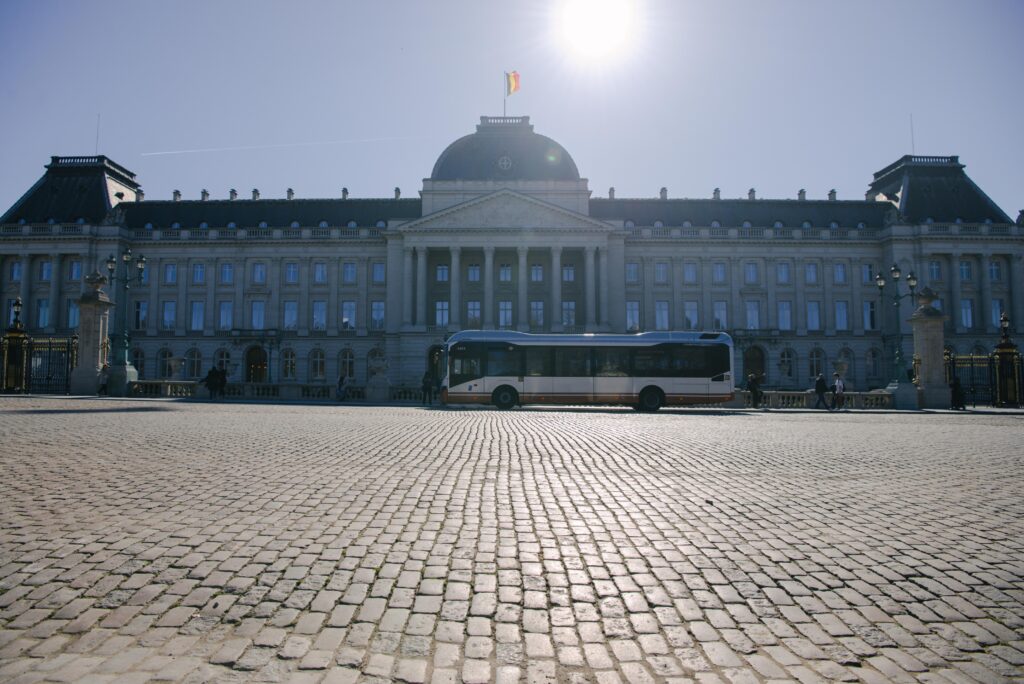
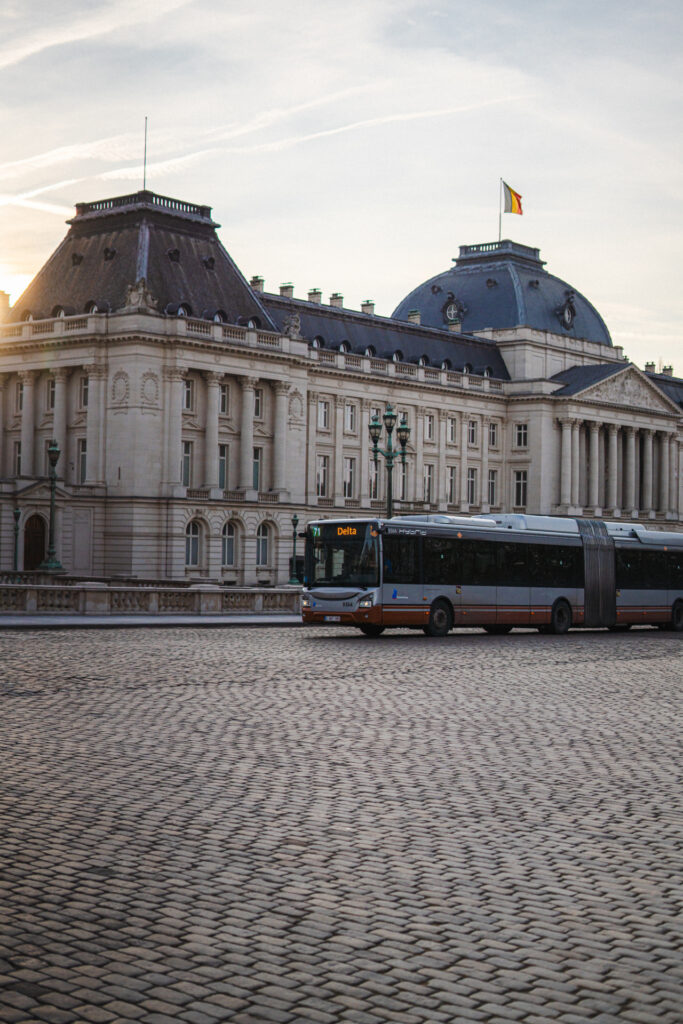
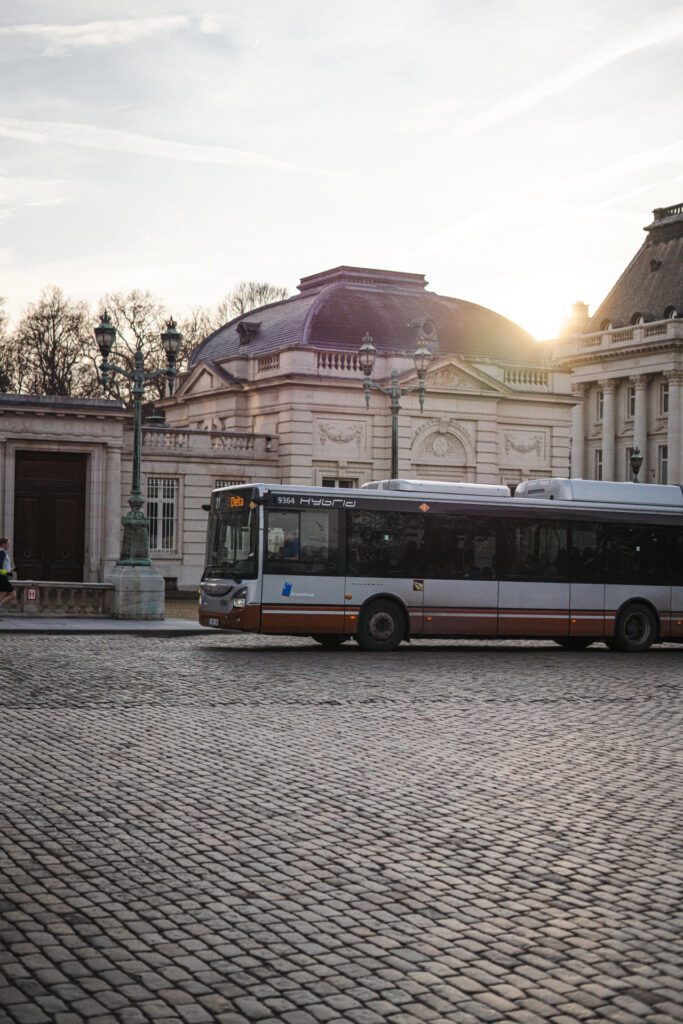
In the Royal Quarter (Quartier Royal), everything falls into place within minutes. The Royal Palace reminds us that we are in the institutional and historical heart of the country. A little further on appears Place Royale, an elegant neoclassical composition built between 1775 and 1782 on the remains of the former Coudenberg Palace. And then there is Mont des Arts: its terraced gardens, perfectly aligned axes and panoramic views over the rooftops of Brussels. It is difficult not to pause here, even if you simply intended to walk through the neighbourhood.
This place also tells the story of a city that is constantly changing. Redesigned in the 20th century with the construction of Ravenstein Street and a new connection between the upper and lower town, Mont des Arts shows how Brussels reshapes, reconnects and reinvents itself. Nearby museums (Musical Instruments, Bozar, Magritte and Fin-de-Siècle) reinforce that sense of cultural richness.
The Central Station is just around the corner, and from here line 71 easily connects to other destinations… or you can simply continue on foot, as everything here is within walking distance.
Final stop: the “centre of the centre”
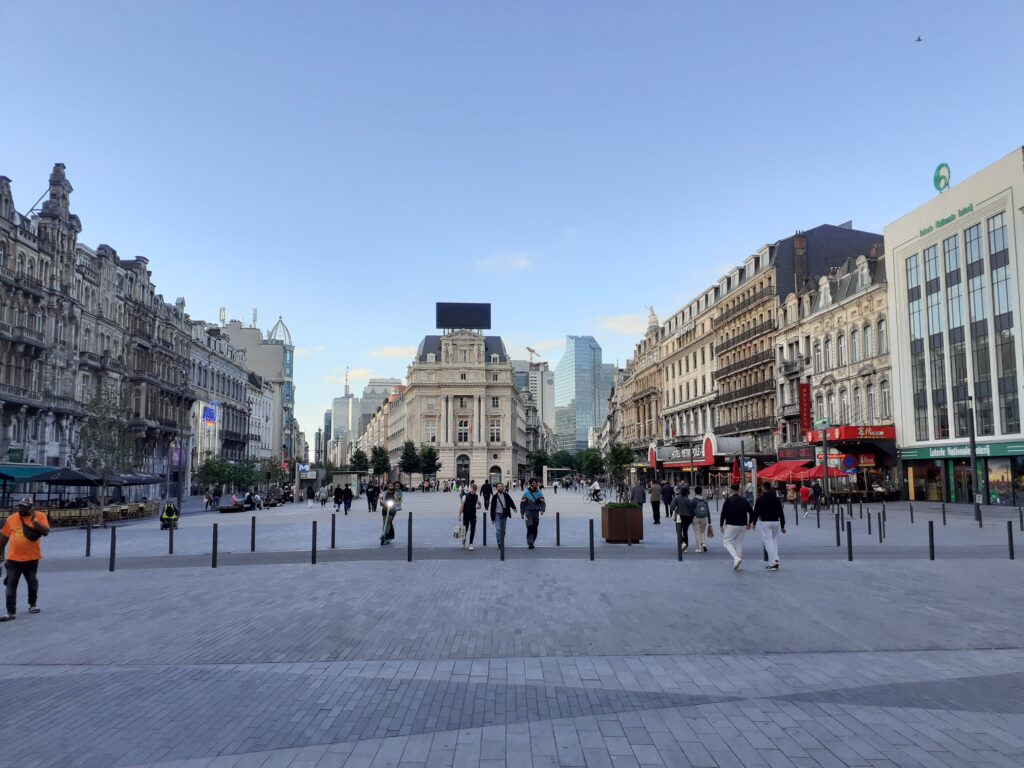
The journey ends at De Brouckère, and the destination is well worth the journey. You find yourself in the very heart of Brussels, in a pedestrian zone full of squares, fin-de-siècle façades, cafés, encounters, lights, bustle and connections with Rue Neuve. The square takes its name from Charles de Brouckère, mayor of Brussels in the 19th century, at a time when the central boulevards replaced the old city walls and completely reshaped the city centre.
At the beginning of the 20th century, the neighbourhood became one of the main leisure areas of Brussels, with grand hotels and prestigious cinemas. That tradition continues today: neon lights, cinemas, lively restaurants and a constant flow of passers-by give the place a unique energy.
It is the perfect place to end a day: to stroll a little longer, catch a film or wander through the nearby shopping streets. But it is also an ideal starting point for another discovery, because De Brouckère immediately makes you want to set off again, perhaps by metro.
Bus 71, a perfect introduction to our capital
In fact, line 71 is ideal for anyone wanting to experience Brussels in real life. It is also the busiest line on the STIB network.
- For the curious: because it links heritage, iconic laces and neighbourhoods full of surrprises.
- For walkers: because you can often alight, wander around, hop back on and start again.
- For families: becuase it offers perfect spots for breaks (the Ponds, large squares) and a route full of small adventures.
- For foodies: because between Flagey, Matongé and the surrounding streets you will find many great places to eat.
- For students and commuters: because it follows the rhythm of everyday life and connects key areas.
So the next time you are looking for an idea for an outing, just keep it simple. Hop on bus 71 at Delta and let it take you all the way to De Brouckère. With historical detours, green breaks, the energy of Ixelles and the great classics of the centre, you are not just travelling from A to B: you are crossing several worlds within Brussels in a single journey.
And perhaps that is the real luxury: (re)discovering the city without a complicated plan, simply by following one single line.