
Read on to discover how Brussels public transport implements its winter plan to get you to your destination.
Winter contingency plan
Snow and cold weather are sweeping across Brussels. To cope with harsh winter conditions, STIB-MIVB has a detailed contingency plan with various scenarios and a series of measures.
During winter, our dispatchers monitor the weather forecasts and are in direct contact with the Royal Meteorological Institute (RMI). Every day, we make a prognosis of the conditions for the next 24 hours. Based on this, we determine which scenario from our winter contingency plan will be activated.
The plan comes into effect when the temperature drops below 5° Celsius. We then inform all services that may be affected. Depending on the information we receive from the RMI and our people in the field, we then take appropriate measures.
Winter contingency plan per mode of transport
When weather conditions disrupt STIB-MIVB lines, various measures are in place to restrict or divert those lines. The goal of these plans is to minimise the impact on you and to provide you with the most reliable information possible. With this information, you can better choose if it might be better to use an alternative way to travel.
Tram
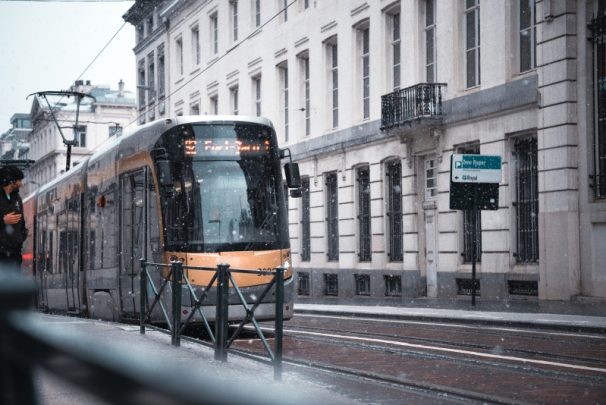
Unlike fallen leaves from trees, snow and black ice don’t generally cause major problems for our trams. Ice does not stick well to the tracks, and the weight of a passing tram easily removes a layer of ice. Our drivers can also put sand on the tracks with their trams at any time, so the chance of skidding is very small.
Most of our tram switches are heated to prevent ice or snow from blocking them. If an unheated switch does get stuck, it’s still possible to free it manually. Our teams then go to the affected site with road salt or a burner to thaw the switch.
These teams can also spread salt on the road to prevent hinder by cars in sensitive areas. The reason is simple: when our trams are delayed during winter weather, it’s usually a result of car traffic that is blocked and prevents the trams to continue their route.
If necessary, we also run a number of our trams at night to keep the tracks clear. They also make sure that our switches don’t get stuck and they remove ice or snow from our overhead lines. This way, we avoid unpleasant surprises when the first trams leave the depot.
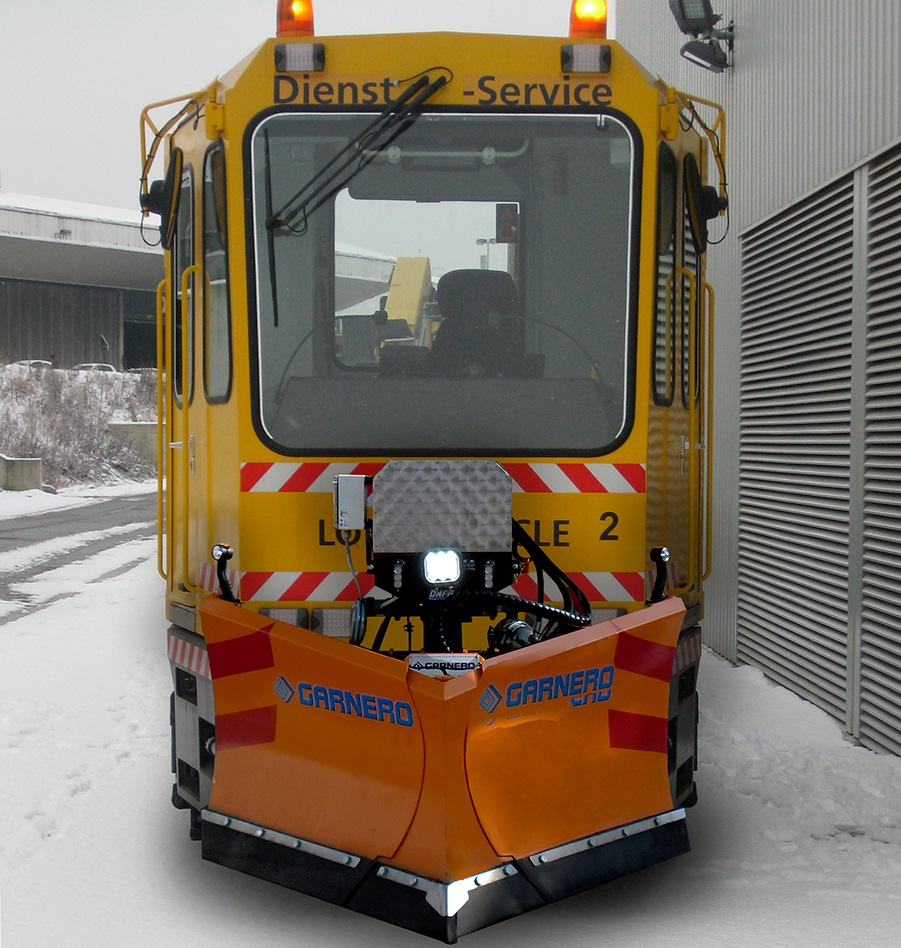
To keep our tracks clear during heavy snowfall, we can also count on our Unimog, a truck that can drive both on the road and on the tracks. It can, for example, spread salt. We also have a tram with a snow plough that can clear the tracks.
The biggest risk to our tram network is falling trees and branches, that fall on our overhead lines due to the weight of the snow. This can cause a lot of disruption. Fortunately, during the other seasons, our teams make sure that the trees along our lines are pruned regularly. This pruning not only maintains the space needed for our trams, but it also greatly reduces the potential disruption caused by storms or strong winds.
Metro
The most reliable means of transport when snow or ice cover the network in Brussels, is the metro. It runs mostly underground, so it’s less affected by winter conditions. Nevertheless, we take measures to make sure it keeps running smoothly, no matter the weather.
In the event of severe frost, we store our metros in a depot instead of outside on the network. We also have special metros with snow ploughs that can travel along sensitive areas. These are sections where the metro runs above ground and where snow can fall. In those areas we limit the speed of our metros.
As with trams and buses, we have salt and sand available to clear the tracks if necessary.
In the event of heavy snowfall, our cleaning teams clear the snow at night and de-ice the entrances to our stations. That way, early birds can hop on the first metros of the day.
Bus
Bus services depend largely on the general conditions in the city. If there’s a risk of frost, light or heavy, those responsible head out on our network at 03.30 am. They assess the general situation and pay particular attention to sensitive areas. Any necessary measures are taken based on their analysis.
We’re also constantly in contact with the municipalities and the Region to report any problems. As road authorities, they are responsible for clearing snow and ice from the roads. In this way, we act as their eyes and ears.
For our buses, there are different phases, depending on the information provided by the RMI:
- temperatures of 0° Celsius or below: monitoring only
- Warning of slippery conditions: employees go out on the network at 04.00 am to check whether the roads are safe to use or not
- Slippery conditions AND confirmation after inspection that certain itineraries must be diverted or restricted due to impassable roads: there are different scenarios for each itinerary, depending on the gravity of the situation, the municipality, etc.
- Decision taken at regional or federal level in response to weather conditions: switch to crisis management
Information for travellers
To find out whether your itinerary or line is affected by bad weather conditions, you can visit our website for more information. In the event of major disruptions, our Facebook page and X account will also provide regular updates with the latest information.
If you have any questions, please contact our Customer Care team.