


Did you know there’s a lot more to being a metro driver than simply driving a metro? We went to Ayhan Topbag, metro instructor, who explains in great detail what the training for metro drivers is like.
Together with your fellow tram and bus drivers, as a metro driver in Brussels you transport millions of passengers every year. The Brussels underground metro network covers 37.5 kilometres. When metro line 3 is completed, another 10 kilometres will be added. To transport these passengers, of course the MIVB needs drivers. But how do you become a metro driver?
Metro driver in 47 days
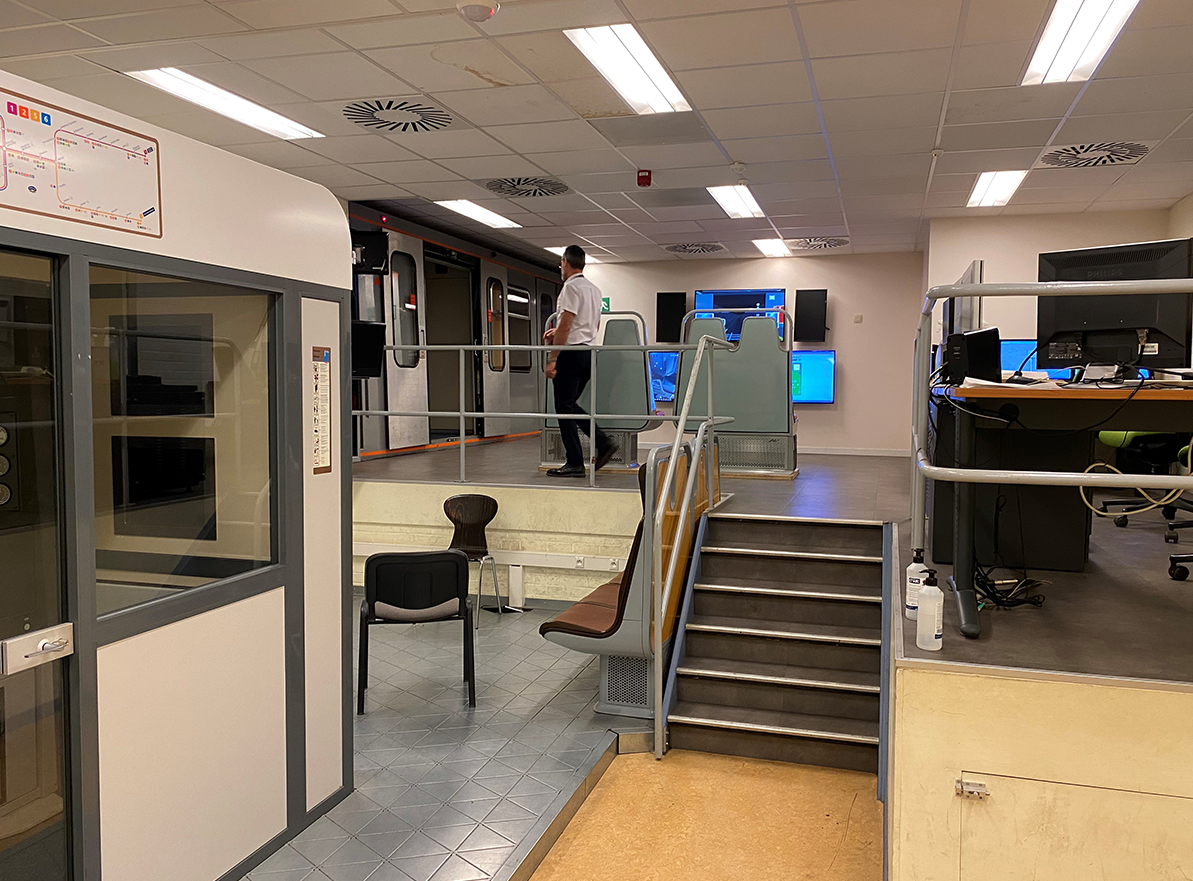
Ayhan has been working for STIB-MIVB for more than ten years. He was a metro driver himself for five years before becoming a trainer. He welcomes us to the Metro Training Centre located at Delta metro station. This is where aspiring metro drivers receive their training. “After you applied and passed a personality test, you end up at the training centre,” explains Ayhan. “The training lasts for 47 days. It is a mix of theory and practice, in the classroom, on the network, and in the depot.”
A job as a metro driver is not as easy as you might think. “You follow a very specific and comprehensive programme, with continuous assessment and regular tests. We are very demanding, because as a metro driver you transport a lot of people and bear a huge responsibility.”
Continuous assessment
From the 1st to the 23rd day of your training, you receive theoretical and practical instruction in the field and at the depot. On the 24th day, the trainers will test your knowledge. “This allows us to determine who can continue the training and who cannot,” explains Ayhan.
Anyone who wants to become a metro driver must score at least 80 per cent on every test, both on the theoretical and practical parts. “If you pass the tests, you can move on to the next phase: driving the metro on the network, under the supervision of an instructor.”
Safety and experience
The rest of the training consists of several phases. “We then gradually move from theory to practice,” says Ayhan. As a future metro driver, you practise on various simulators and learn to drive different types of metro. “You have to be able to drive all types of metros used by STIB-MIVB. You have no choice!”
The step after the simulator is to drive an empty metro under the supervision of an instructor. After each exercise, you get one step closer to reality, to normal service, with passengers on board.
In addition, the training programme also emphasises other elements. Driving a metro is much more than just being able to operate it. Passenger safety is at the top of the list of priorities. As a future driver, you must know and be able to apply all possible safety rules. This includes knowledge about the third rail that supplies the metro with power and is under 900 volts, being able to resolve breakdowns yourself, emergency procedures, etc. Don’t forget all the manoeuvres in the depot, such as entering and leaving the depot, turning around…
Metro driver exams
At the end of the training programme, each student is evaluated. After four days of intensive revision, the students take their exams. Over two days, all the course material is reviewed in great detail. At the end, you receive a final score. “The exam consists of 11 parts. You must score 80 per cent on each part. Not 50, not 60, not 70. You really have to master the material, which is why the minimum is 80 per cent,” explains Ayhan.
In 2021, 50 candidates passed their training at the Metro Training Centre. “More than 3 out of 4 candidates pass their exam. The pass rate fluctuates between 85 and 90 per cent.”
A typical day as a trainee metro driver
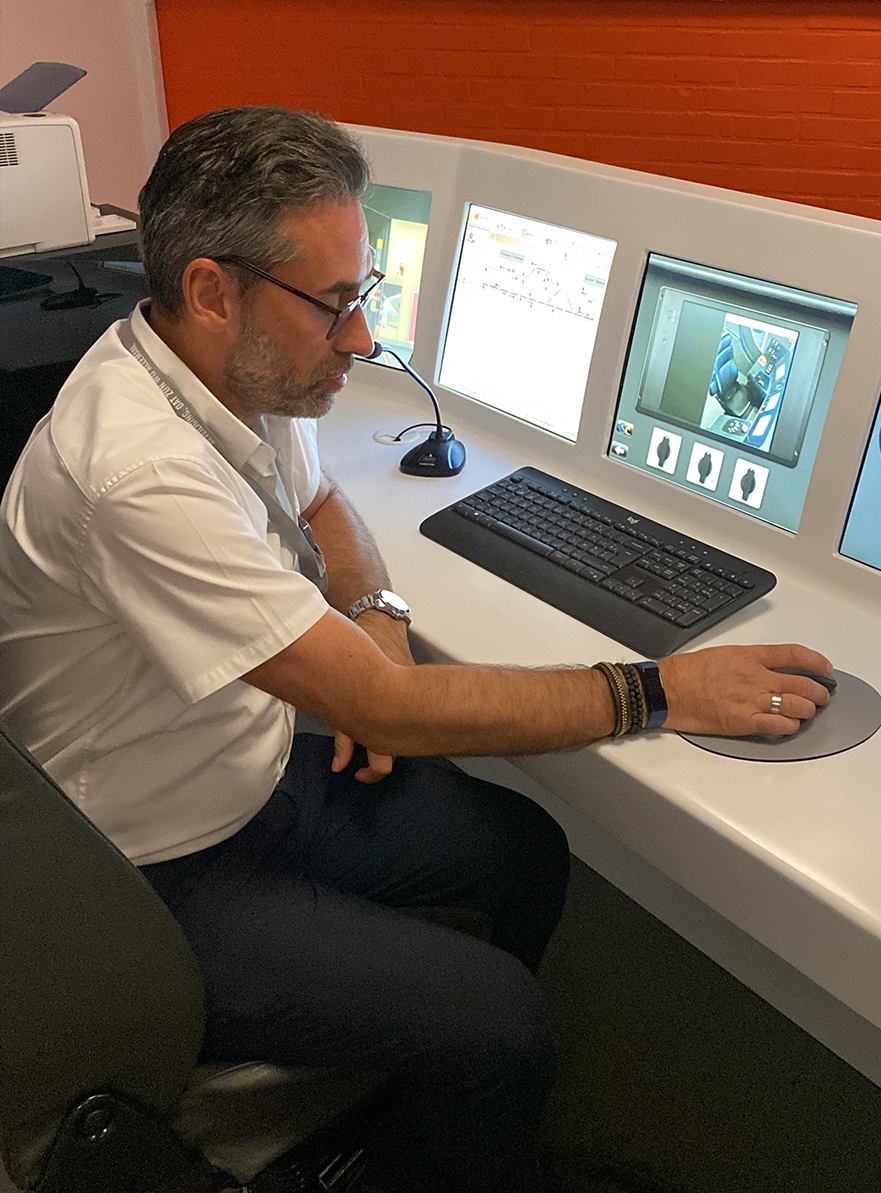
What does a typical day at the metro training centre look like? The day starts at 7:45 am, with 2.5 hours of theory lessons. Afterwards, the students, who are divided into groups of four, take their places in the simulator.
In the afternoon, the focus shifts to the network and the depot. The day ends with a questionnaire on what was covered during that day.
“From day 7 or 8 of the training, the list also includes questions about the theory covered in the first four days. This allows us to continue testing their knowledge and understanding,” says Ayhan. “Of course, the candidates receive a complete coursebook at the beginning.”
Simulator
The STIB-MIVB training centre has no fewer than five different simulators available to trainees, one for each type of metro. The aim is to familiarise them with every type of metro in our fleet. “Anyone who starts with us must be able to drive all metro trains, from the oldest to the most recent,” says Ayhan.
Incidentally, the simulators are not just for trainees. Every metro driver receives refresher training every six months and must pass a test. Anyone who has to learn to drive a new type of metro, such as our brand new M7, must first use the simulator.
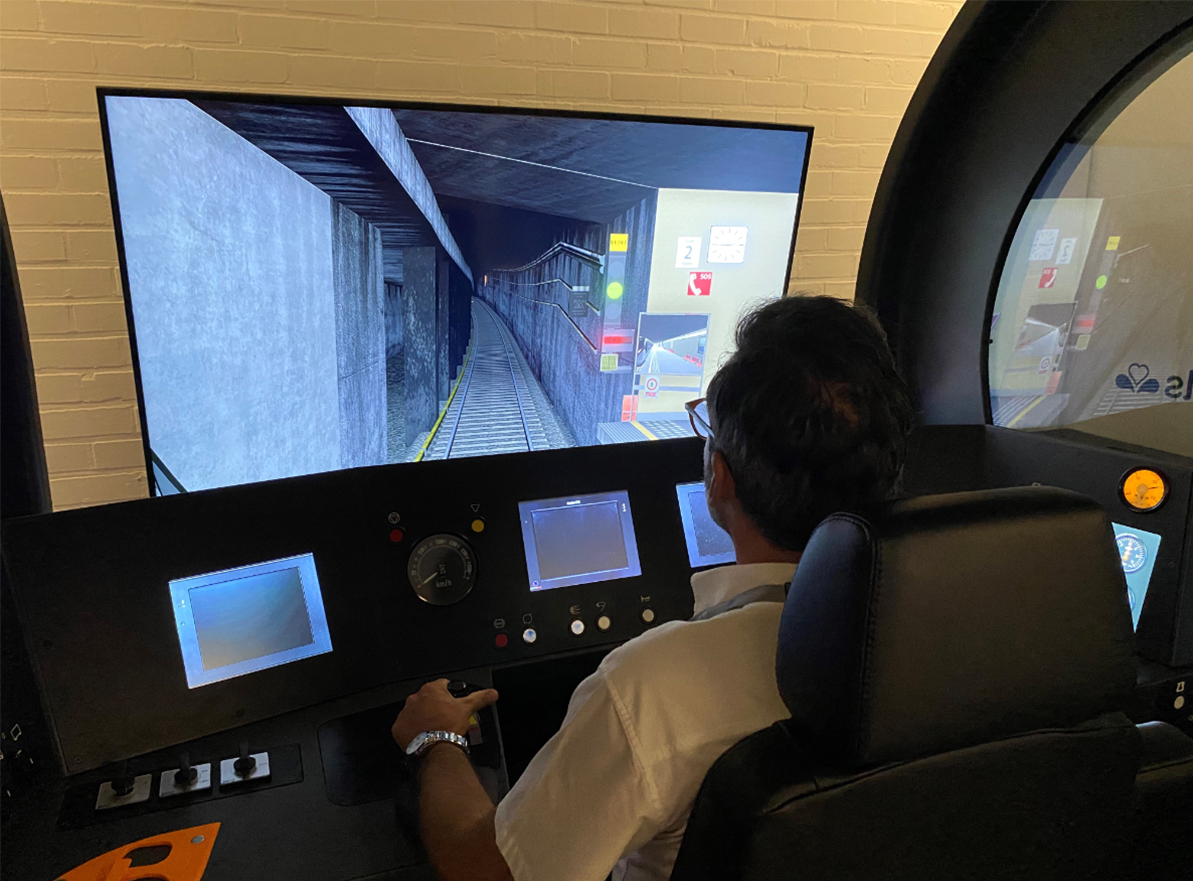
On average you train for 30 minutes per day in the simulator. The instructors present you with a whole range of emergency situations, such as a breakdown or a fire in a station. You really have to learn how to drive the metro and be familiar with all the possible scenarios that go with it. “While one of the candidates is in the simulator, the others watch. They see what happens and listen to what is being said. They can also intervene together with the instructor. We often ask for their opinion on the situation,” says Ayhan. Through this constant interaction, everyone learns their future profession through observation and dialogue.
Ready for the metro
Once they have passed their exams, the brand-new metro drivers are assigned to a depot. “The new drivers cannot choose which metro they drive. It all depends on the depot where they work, ” explains Ayhan.
“Driving a metro is one thing,” Ayhan adds. “But what really makes the job complex, is everything that comes with it: communication, procedures if something goes wrong, signalling, responsiveness in the event of a breakdown, etc. A good metro driver must be very attentive and pragmatic.”
- Would you like to work for STIB-MIVB? Visit our job site.